JEE Advanced · Chemistry

Organometallic Compounds PYQs

3 previous-year questions from Organometallic Compounds in JEE Advanced, 2014–2023, latest first.

Q1JEE Advanced · 4 Jun 2023 · Paper-1One or more correct
In the following reactions, P, Q, R, and S are the major products. CH3CH2CH(CH3)CH2CN → (i) PhMgBr, then H3O+ (ii) PhMgBr, then H2O \underset{(ii)\text{ PhMgBr},\text{ then H}_{2}O}{\xrightarrow{ (i)\text{ PhMgBr},\text{ then H}_{3}O^{+} }} P Ph–H + CH3COCl → (i) anhyd. AlCl3 (ii) PhMgBr, then H2O \underset{(ii)\text{ PhMgBr},\text{ then H}_{2}O}{\xrightarrow{ (i)\text{ anhyd}.\text{ AlCl}_{3} }} Q CH3CH2COCl → (i)12(PhCH2)2Cd (ii) PhMgBr, then H2O \underset{(ii)\text{ PhMgBr},\text{ then H}_{2}O}{\xrightarrow{ (i) \frac{1}{2} (PhCH_{2})_{2}Cd }} R PhCH2CHO → (i) PhMgBr, then H2O(ii) CrO3, dil.H2SO4 (iii) HCN (iv)H2SO4,Δ \underset{(iii)\text{ HCN }(iv) H_{2}SO_{4}, Δ}{\xrightarrow{ (i)\text{ PhMgBr},\text{ then H}_{2}O (ii)\text{ CrO}_{3},\text{ dil}. H_{2}SO_{4} }} S The correct statement(s) about P, Q, R, and S is(are)
  1. (A)Both P and Q have asymmetric carbon(s).
  2. (B)Both Q and R have asymmetric carbon(s).
  3. (C)Both P and R have asymmetric carbon(s).
  4. (D)P has asymmetric carbon(s), S does not have any asymmetric carbon.
Show answer & solution

Answer: C, D

P: nitrile + PhMgBr →→\rightarrow ketone CH3CH2CH(CH3)CH2COPh, then PhMgBr →→\rightarrow CH3CH2CH(CH3)CH2C(OH)Ph2 (chiral at CH(CH3)) Q: acetophenone + PhMgBr →→\rightarrow Ph2C(OH)CH3 (two Ph groups ⇒⇒\Rightarrow achiral) R: CH3CH2COCH2Ph + PhMgBr →→\rightarrow CH3CH2C(OH)(Ph)CH2Ph (chiral) S: PhCH2CH(OH)Ph →→\rightarrow PhCH2COPh →→\rightarrow cyanohydrin →→\rightarrow H2SO4/Δ: hydrolysis and dehydration ⇒⇒\Rightarrow PhCH=C(Ph)COOH (no asymmetric carbon) So P and R are chiral; Q and S are not ⇒⇒\Rightarrow (C) and (D)
Q2JEE Advanced · 4 Jun 2023 · Paper-2
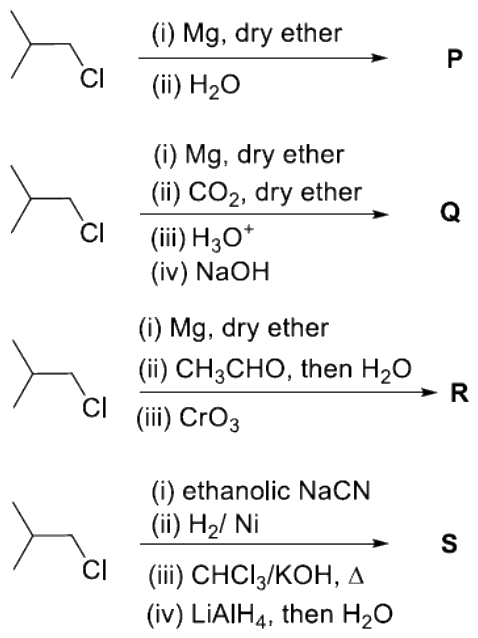
In the following reactions, P, Q, R and S are the major products. figure The correct statement about P, Q, R and S is

Question 2
  1. (A)P is a primary alcohol with four carbons.
  2. (B)Q undergoes Kolbe’s electrolysis to give an eight-carbon product.
  3. (C)R has six carbons and it undergoes Cannizzaro reaction.
  4. (D)S is a primary amine with six carbons.
Show answer & solution

Answer: B

P: (CH3)2CHCH2MgCl + H2O →→\rightarrow isobutane (alkane, not an alcohol) ⇒⇒\Rightarrow (A) false Q: Grignard + CO2 →→\rightarrow (CH3)2CHCH2COOH →→\rightarrow sodium 3-methylbutanoate; Kolbe electrolysis couples two C4 radicals ⇒⇒\Rightarrow 2,5-dimethylhexane (8 C) ⇒⇒\Rightarrow (B) true R: + CH3CHO →→\rightarrow 4-methylpentan-2-ol →→\rightarrow CrO3 →→\rightarrow 4-methylpentan-2-one (a ketone with α-H; no Cannizzaro) ⇒⇒\Rightarrow (C) false S: RCN →→\rightarrow RCH2NH2 →→\rightarrow (carbylamine) RCH2NC →→\rightarrow (LiAlH4) RCH2NHCH3, a secondary amine ⇒⇒\Rightarrow (D) false
Q3JEE Advanced · 25 May 2014 · Paper-2
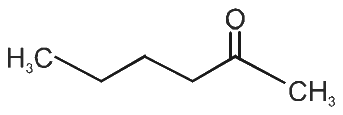
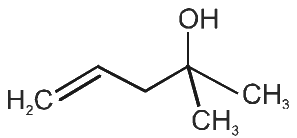
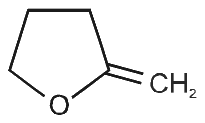
The major product in the following reaction is figure
Question 3
  1. (A)Option A
  2. (B)Option B
  3. (C)Option C
  4. (D)Option D
Show answer & solution

Answer: D

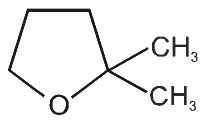
CH3MgBr adds to the ketone giving a tertiary alkoxide The alkoxide displaces Cl intramolecularly (5-membered ring) ⇒⇒\Rightarrow 2,2-dimethyltetrahydrofuran ⇒⇒\Rightarrow (D)

Practise all 3 Organometallic Compounds PYQs

Untimed with solutions, or as a timed test. Your mistakes are saved so you can retry them.

Start free