JEE Advanced · Chemistry

Organic Chemistry - Basic Principles PYQs

19 previous-year questions from Organic Chemistry - Basic Principles in JEE Advanced, 2009–2025, latest first.

Q1JEE Advanced · 18 May 2025 · Paper-1
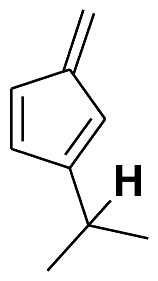
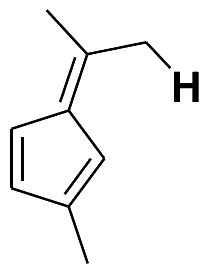
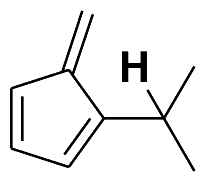
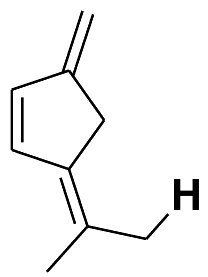
Consider the depicted hydrogen (H) in the hydrocarbons given below. The most acidic hydrogen (H) is
  1. (A)Option A
  2. (B)Option B
  3. (C)Option C
  4. (D)Option D
Show answer & solution

Answer: B

Removing the marked H in (B) gives a carbanion conjugated through the exocyclic double bond into the five-membered ring, forming an aromatic cyclopentadienyl-type anion (6π electrons). This conjugate base is the most stable, so the H in (B) is the most acidic.
Q2JEE Advanced · 3 Oct 2021 · Paper-2
Paragraph IV The amount of energy required to break a bond is same as the amount of energy released when the same bond is formed. In gaseous state, the energy required for homolytic cleavage of a bond is called Bond Dissociation Energy (BDE) or Bond Strength. BDE is affected by s-character of the bond and the stability of the radicals formed. Shorter bonds are typically stronger bonds. BDEs for some bonds are given below:
Bond cleavage
ΔH∘{}^{∘\circ} (kcal mol−1)
H3C–H(g) ⟶ H3C•(g) + H•(g)
105
Cl–Cl(g) ⟶ Cl•(g) + Cl•(g)
58
H3C–Cl(g) ⟶ H3C•(g) + Cl•(g)
85
H–Cl(g) ⟶ H•(g) + Cl•(g)
103
Correct match of the C–H bonds (shown in bold) in Column J with their BDE in Column K is
Column J: Molecule
Column K: BDE (kcal mol−1)
(P) H–CH(CH3)2
(i) 132
(Q) H–CH2Ph
(ii) 110
(R) H–CH=CH2
(iii) 95
(S) H–C≡CH
(iv) 88
  1. (A)P – iii, Q – iv, R – ii, S – i
  2. (B)P – i, Q – ii, R – iii, S – iv
  3. (C)P – iii, Q – ii, R – i, S – iv
  4. (D)P – ii, Q – i, R – iv, S – iii
Show answer & solution

Answer: A

More stable radical ⇒⇒\Rightarrow weaker C–H bond; more s-character ⇒⇒\Rightarrow stronger bond. Benzyl radical (Q) most stable ⇒⇒\Rightarrow 88; 2∘{}^{∘\circ} alkyl (P) ⇒⇒\Rightarrow 95; vinyl (R, sp2) ⇒⇒\Rightarrow 110; ethynyl (S, sp) ⇒⇒\Rightarrow 132
Q3JEE Advanced · 27 Sept 2020 · Paper-1One or more correct
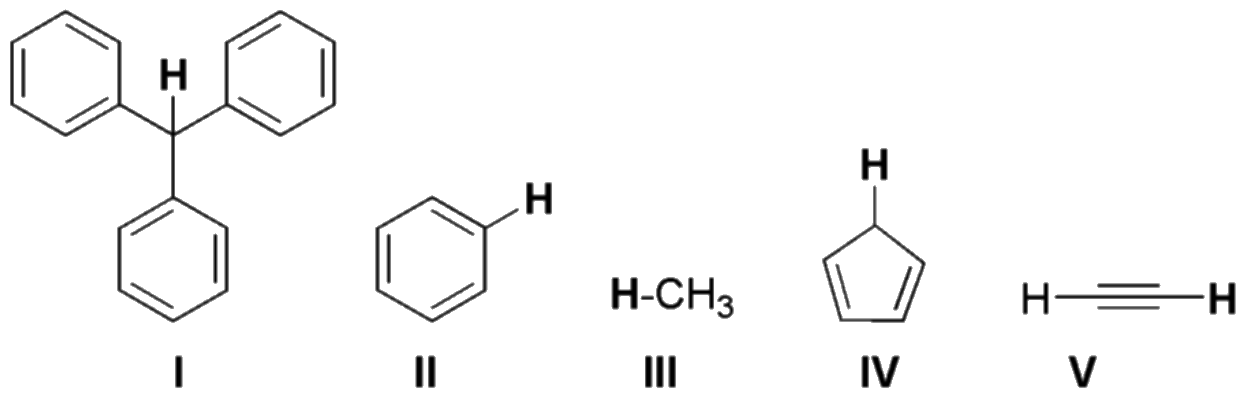
With respect to the compounds I–V, choose the correct statement(s). figure
Question 3
  1. (A)The acidity of compound I is due to delocalization in the conjugate base.
  2. (B)The conjugate base of compound IV is aromatic.
  3. (C)Compound II becomes more acidic, when it has a –NO2 substituent.
  4. (D)The acidity of compounds follows the order I > IV > V > II > III.
Show answer & solution

Answer: A, B, C

(A) Ph3C− is resonance stabilised over three rings ✓ (B) Cyclopentadienyl anion has 6π electrons ⇒⇒\Rightarrow aromatic ✓ (C) –NO2 is electron-withdrawing ⇒⇒\Rightarrow increases acidity of benzene C–H ✓ (D) pKa: IV (16) < V (25) < I (33) < II (43) < III (50) ⇒⇒\Rightarrow order IV > V > I > II > III ✗

16 more Organic Chemistry - Basic Principles questions

Practise them free

Practise all 19 Organic Chemistry - Basic Principles PYQs

Untimed with solutions, or as a timed test. Your mistakes are saved so you can retry them.

Start free