JEE Advanced · Chemistry

Aromatic Compounds PYQs

22 previous-year questions from Aromatic Compounds in JEE Advanced, 2012–2026, latest first.

Q1JEE Advanced · 17 May 2026 · Paper-1One or more correct
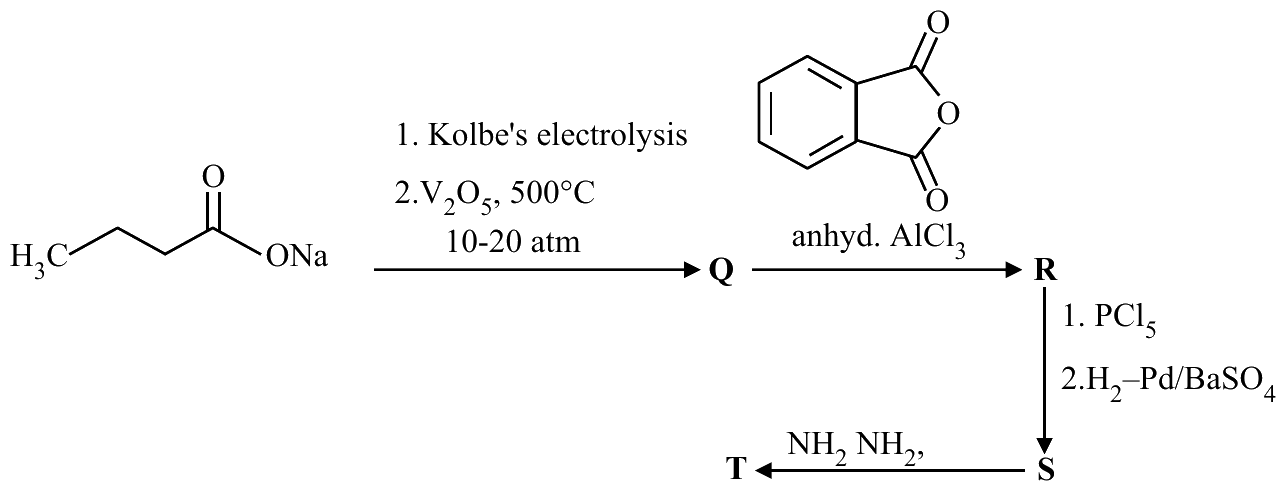
In the following reaction sequence Q, R, S and T are the major products. figure The correct statement(s) about Q, R, S and T is (are)
Question 1
  1. (A)S on warming with ammoniacal AgNO3 results in the formation of silver mirror.
  2. (B)Q on treatment with Cl2 (excess)/UV gives gammaxane.
  3. (C)T is a heterocylic compound.
  4. (D)R on acid catalyzed intermolecular cyclization followed by treatment with Zn-Hg/HCl gives 9,10-dihydroxyanthracene.
Show answer & solution

Answer: A, B, C

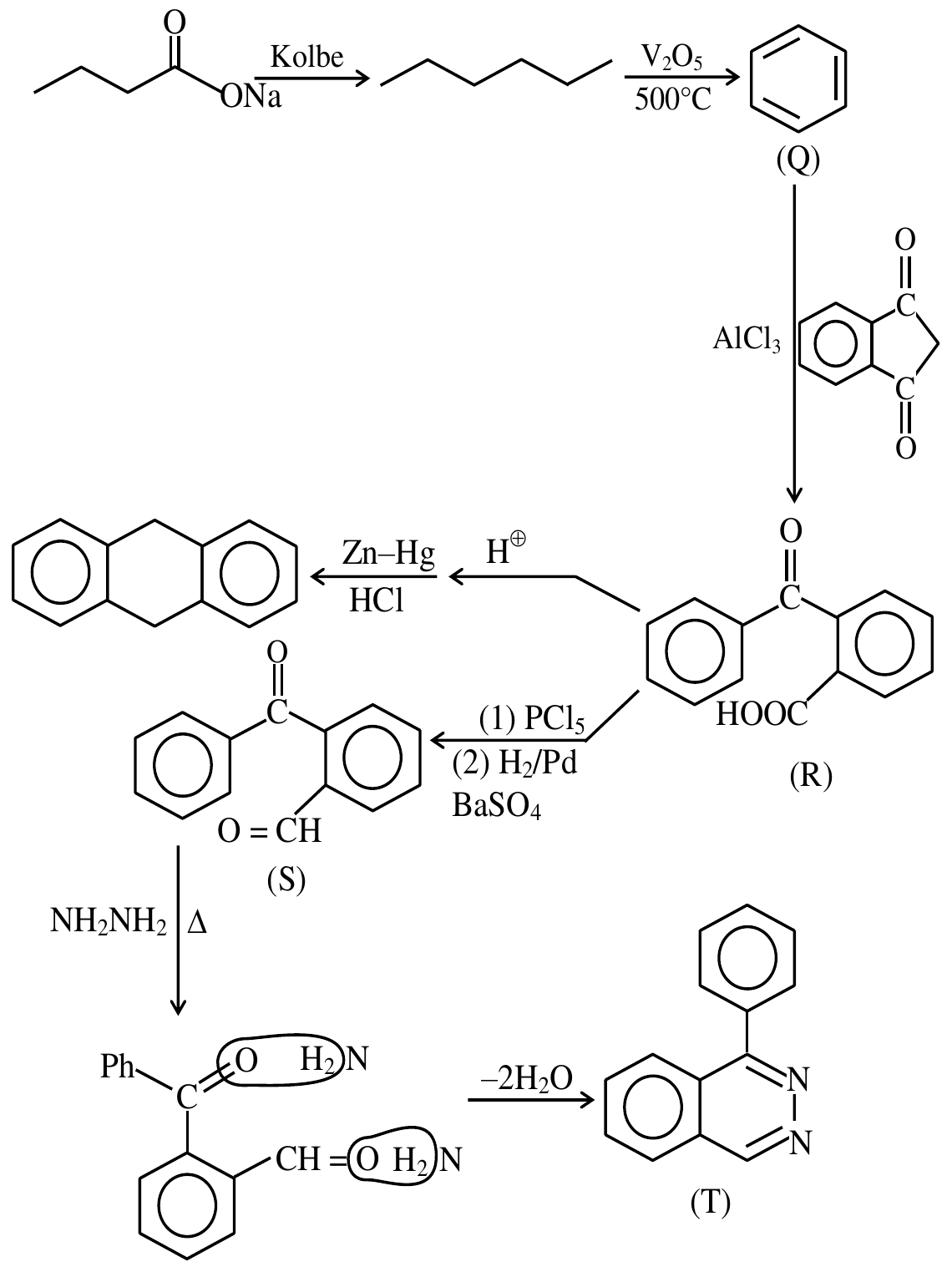
Kolbe electrolysis of sodium butanoate gives hexane; V2O5/500 ∘{}^{∘\circ}C aromatises it to benzene (Q) Friedel–Crafts with phthalic anhydride gives 2-benzoylbenzoic acid (R); PCl5 then Rosenmund gives 2-benzoylbenzaldehyde (S) S + NH2NH2 gives 1-phenylphthalazine (T), a heterocycle ✓; S is an aldehyde, gives silver mirror ✓; Q + Cl2/UV gives BHC (gammaxane) ✓ R on cyclisation and Clemmensen reduction gives 9,10-dihydroanthracene, not the dihydroxy compound ✗ figure
Solution
Q2JEE Advanced · 18 May 2025 · Paper-1
The major products obtained from the reactions in List-II are the reactants for the named reactions mentioned in List-I. Match each entry in List-I with the appropriate entry in List-II and choose the correct option.
List-I
List-II
(P)Stephen reaction(1)Toluene → (i) CrO2Cl2/CS2 (ii)H3O+ \underset{(ii) H_{3}O^{+}}{\xrightarrow{ (i)\text{ CrO}_{2}Cl_{2}/CS_{2} }}
(Q)Sandmeyer reaction(2)Benzoic acid → (i) PCl5;(ii)NH3 (iii)P4O10,Δ \underset{(iii) P_{4}O_{10}, Δ}{\xrightarrow{ (i)\text{ PCl}_{5}; (ii) NH_{3} }}
(R)Hoffmann bromamide degradation reaction(3)Nitrobenzene → (i)Fe, HCl (ii) HCl, NaNO2(273–278K),H2O \underset{(ii)\text{ HCl},\text{ NaNO}_{2} (273–278 K), H_{2}O}{\xrightarrow{ (i) Fe,\text{ HCl }}}
(S)Cannizzaro reaction(4)Toluene → (i)Cl2/hν,H2O;(ii) Tollen’s reagent (iii)SO2Cl2;(iv)NH3 \underset{(iii) SO_{2}Cl_{2}; (iv) NH_{3}}{\xrightarrow{ (i) Cl_{2}/hν, H_{2}O; (ii)\text{ Tollen}’s\text{ reagent }}}
(5)Aniline → (i)(CH3CO)2O, Pyridine (ii) HNO3,H2SO4,288K;(iii)aq. NaOH \underset{(ii)\text{ HNO}_{3}, H_{2}SO_{4}, 288 K; (iii) aq.\text{ NaOH}}{\xrightarrow{ (i) (CH_{3}CO)_{2}O,\text{ Pyridine }}}
  1. (A)P →→\rightarrow 2; Q →→\rightarrow 4; R →→\rightarrow 1; S →→\rightarrow 3
  2. (B)P →→\rightarrow 2; Q →→\rightarrow 3; R →→\rightarrow 4; S →→\rightarrow 1
  3. (C)P →→\rightarrow 5; Q →→\rightarrow 3; R →→\rightarrow 4; S →→\rightarrow 2
  4. (D)P →→\rightarrow 5; Q →→\rightarrow 4; R →→\rightarrow 2; S →→\rightarrow 1
Show answer & solution

Answer: B

(1) Toluene →→\rightarrow benzaldehyde (Etard) — reactant for Cannizzaro ⇒⇒\Rightarrow S →→\rightarrow 1 (2) Benzoic acid →→\rightarrow benzoyl chloride →→\rightarrow benzamide →→\rightarrow benzonitrile — reactant for Stephen reduction ⇒⇒\Rightarrow P →→\rightarrow 2 (3) Nitrobenzene →→\rightarrow aniline →→\rightarrow benzenediazonium chloride — reactant for Sandmeyer ⇒⇒\Rightarrow Q →→\rightarrow 3 (4) Toluene →→\rightarrow benzaldehyde →→\rightarrow benzoic acid →→\rightarrow benzoyl chloride →→\rightarrow benzamide — reactant for Hoffmann bromamide ⇒⇒\Rightarrow R →→\rightarrow 4 (5) Aniline →→\rightarrow acetanilide →→\rightarrow p-nitroacetanilide →→\rightarrow p-nitroaniline (not used)
Q3JEE Advanced · 26 May 2024 · Paper-1
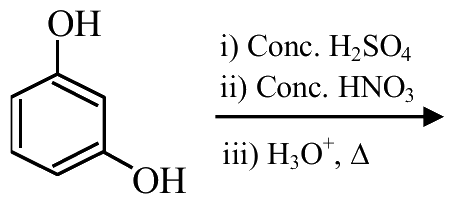
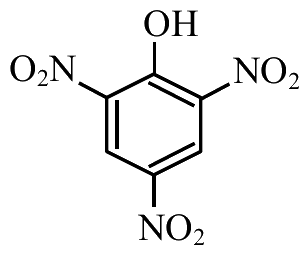
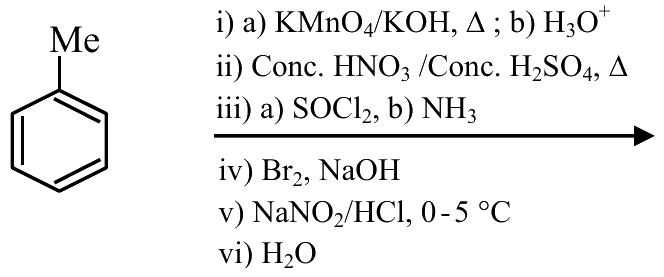
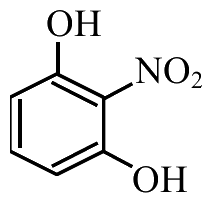
List-I contains various reaction sequences and List-II contains different phenolic compounds. Match each entry in List-I with the appropriate entry in List-II and choose the correct option.
List-I
List-II
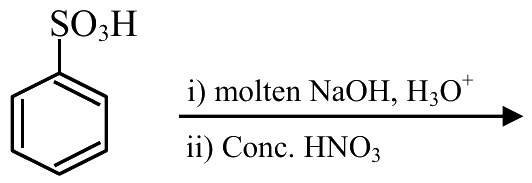
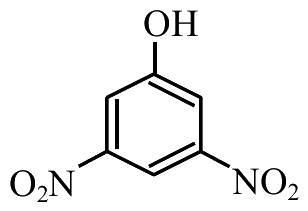
(P)figure(1)figure
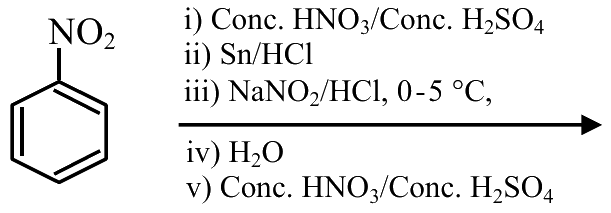
(Q)figure(2)figure
(R)figure(3)figure
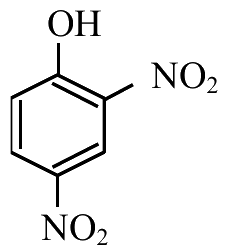
(S)figure(4)figure
(5)figure
Question 3Question 3Question 3Question 3Question 3Question 3Question 3Question 3Question 3
  1. (A)P-2, Q-3, R-4, S-5
  2. (B)P-2, Q-3, R-5, S-1
  3. (C)P-3, Q-5, R-4, S-1
  4. (D)P-3, Q-2, R-5, S-4
Show answer & solution

Answer: C

(P) Benzenesulfonic acid →→\rightarrow (molten NaOH, H3O+) phenol →→\rightarrow conc. HNO3 ⇒⇒\Rightarrow 2,4,6-trinitrophenol (picric acid) ⇒⇒\Rightarrow P →→\rightarrow 3 (Q) Nitrobenzene →→\rightarrow m-dinitrobenzene →→\rightarrow (Sn/HCl) m-phenylenediamine →→\rightarrow bis-diazonium →→\rightarrow (H2O) resorcinol →→\rightarrow nitration ⇒⇒\Rightarrow 2,4,6-trinitroresorcinol ⇒⇒\Rightarrow Q →→\rightarrow 5 (R) Resorcinol →→\rightarrow sulphonation at 4 and 6 (blocking) →→\rightarrow nitration at C-2 →→\rightarrow desulphonation (H3O+, Δ) ⇒⇒\Rightarrow 2-nitroresorcinol ⇒⇒\Rightarrow R →→\rightarrow 4 (S) Toluene →→\rightarrow benzoic acid →→\rightarrow 3,5-dinitrobenzoic acid →→\rightarrow amide →→\rightarrow (Hofmann) 3,5-dinitroaniline →→\rightarrow diazotisation →→\rightarrow H2O ⇒⇒\Rightarrow 3,5-dinitrophenol ⇒⇒\Rightarrow S →→\rightarrow 1

19 more Aromatic Compounds questions

Practise them free

Practise all 22 Aromatic Compounds PYQs

Untimed with solutions, or as a timed test. Your mistakes are saved so you can retry them.

Start free