JEE Advanced · Chemistry

Alcohol And Ether PYQs

10 previous-year questions from Alcohol And Ether in JEE Advanced, 2009–2025, latest first.

Q1JEE Advanced · 18 May 2025 · Paper-2One or more correct
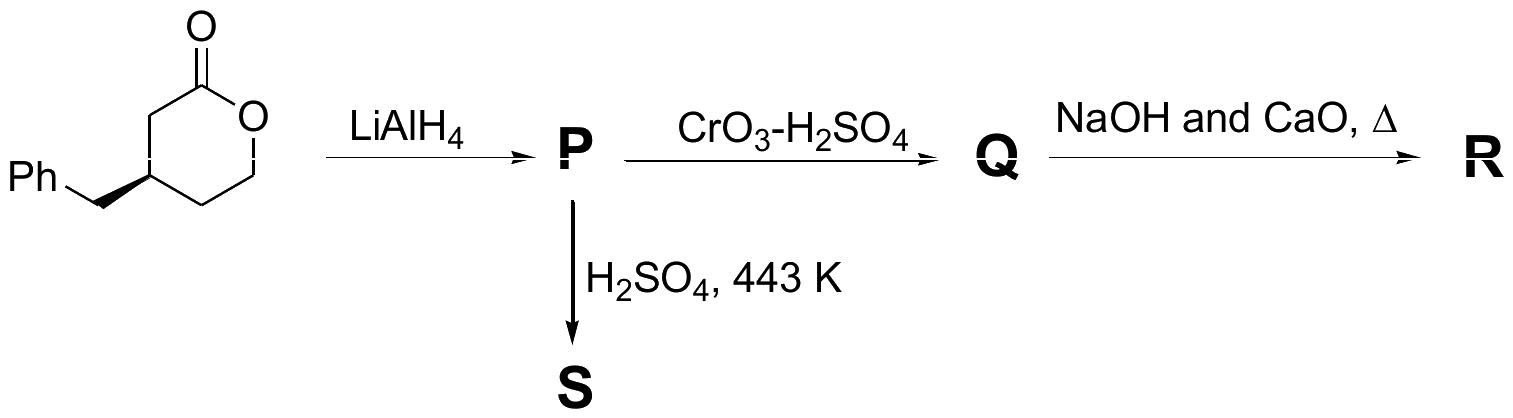
For the reaction sequence given below, the correct statement(s) is(are) figure
Question 1
  1. (A)P is optically active.
  2. (B)S gives Bayer’s test.
  3. (C)Q gives effervescence with aq. NaHCO3.
  4. (D)R is an alkyne.
Show answer & solution

Answer: B, C

LiAlH4 opens the lactone to the diol P: HOCH2CH2–CH(CH2Ph)–CH2CH2OH. The two arms are identical, so P is achiral ⇒⇒\Rightarrow (A) false. CrO3–H2SO4 oxidises both –CH2OH groups ⇒⇒\Rightarrow Q: HOOC–CH2–CH(CH2Ph)–CH2–COOH, which releases CO2 with NaHCO3 ⇒⇒\Rightarrow (C) true. Soda-lime decarboxylation of Q ⇒⇒\Rightarrow R: CH3–CH(CH2Ph)–CH3, an alkane ⇒⇒\Rightarrow (D) false. Conc. H2SO4 at 443 K dehydrates P to an unsaturated compound S (C=C), which decolourises Baeyer’s reagent ⇒⇒\Rightarrow (B) true.
Q2JEE Advanced · 26 May 2024 · Paper-1
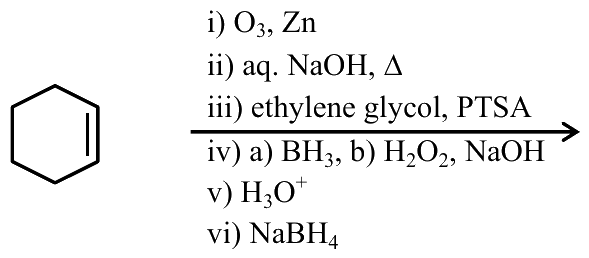
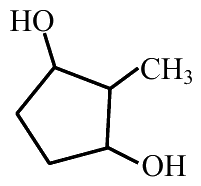
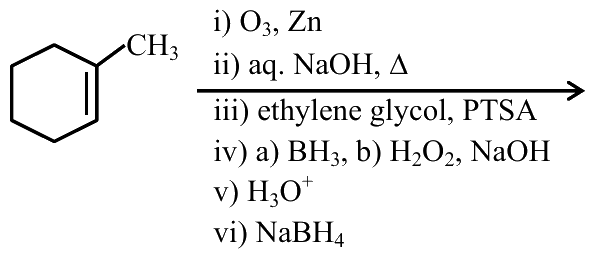
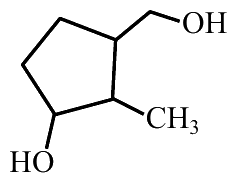
List-I contains various reaction sequences and List-II contains the possible products. Match each entry in List-I with the appropriate entry in List-II and choose the correct option.
List-I
List-II
(P)figure(1)figure
(Q)figure(2)figure
(R)figure(3)figure
(S)figure(4)figure
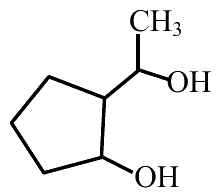
(5)figure
Question 2Question 2Question 2Question 2Question 2Question 2Question 2Question 2Question 2
  1. (A)P →→\rightarrow 3, Q →→\rightarrow 5, R →→\rightarrow 4, S →→\rightarrow 1
  2. (B)P →→\rightarrow 3, Q →→\rightarrow 2, R →→\rightarrow 4, S →→\rightarrow 1
  3. (C)P →→\rightarrow 3, Q →→\rightarrow 5, R →→\rightarrow 1, S →→\rightarrow 4
  4. (D)P →→\rightarrow 5, Q →→\rightarrow 2, R →→\rightarrow 4, S →→\rightarrow 1
Show answer & solution

Answer: A

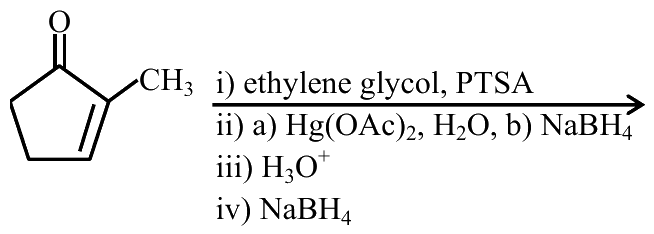
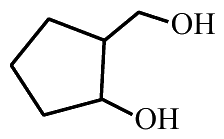
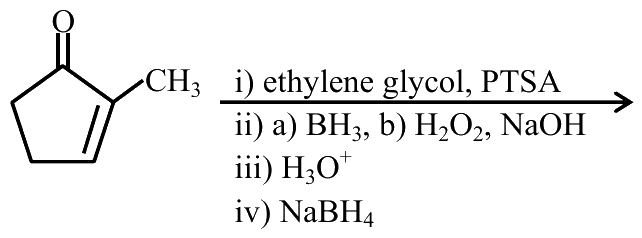
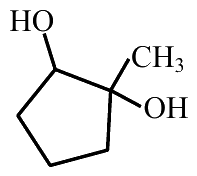
(P) Cyclohexene →→\rightarrow (O3/Zn) hexanedial →→\rightarrow (intramolecular aldol, Δ) cyclopent-1-ene-1-carbaldehyde →→\rightarrow CHO protected as acetal →→\rightarrow hydroboration–oxidation (anti-Markovnikov, trans OH) →→\rightarrow H3O+ frees CHO →→\rightarrow NaBH4 ⇒⇒\Rightarrow 2-(hydroxymethyl)cyclopentan-1-ol ⇒⇒\Rightarrow P →→\rightarrow 3 (Q) 1-Methylcyclohexene →→\rightarrow 6-oxoheptanal →→\rightarrow aldol ⇒⇒\Rightarrow 1-acetylcyclopentene →→\rightarrow ketal →→\rightarrow hydroboration–oxidation →→\rightarrow deprotection →→\rightarrow NaBH4 ⇒⇒\Rightarrow 2-(1-hydroxyethyl)cyclopentan-1-ol ⇒⇒\Rightarrow Q →→\rightarrow 5 (R) 2-Methylcyclopent-2-enone: ketal; oxymercuration–demercuration puts OH on the more substituted (methyl-bearing) carbon; deprotection and NaBH4 ⇒⇒\Rightarrow 2-methylcyclopentane-1,2-diol ⇒⇒\Rightarrow R →→\rightarrow 4 (S) Same ketal; hydroboration–oxidation puts OH on the less substituted carbon (C-3); deprotection and NaBH4 ⇒⇒\Rightarrow 2-methylcyclopentane-1,3-diol ⇒⇒\Rightarrow S →→\rightarrow 1
Q3JEE Advanced · 27 May 2019 · Paper-2
Answer the following by appropriately matching the lists based on the information given in the paragraph. List-I includes starting materials and reagents of selected chemical reactions. List-II gives structures of compounds that may be formed as intermediate products and/or final products from the reactions of List-I.
List-I
List-II
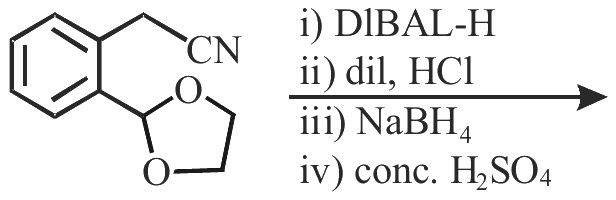
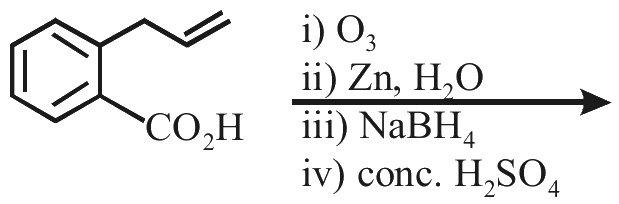
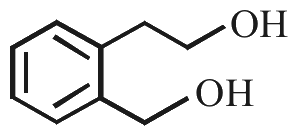
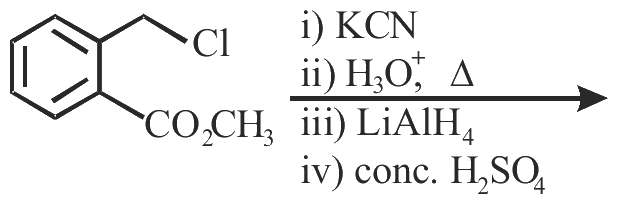
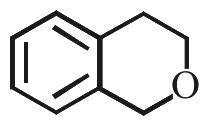
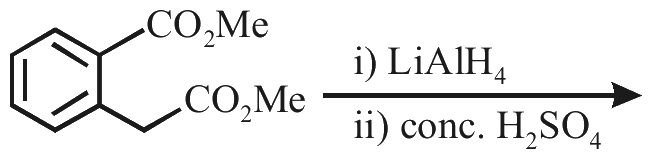
(I)figure(P)figure
(II)figure(Q)figure
(III)figure(R)figure
(IV)figure(S)figure
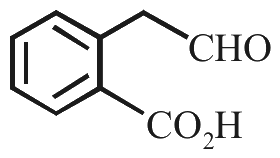
(T)figure
(U)figure
Which of the following options has correct combination considering List-I and List-II?
Question 3Question 3Question 3Question 3Question 3Question 3Question 3Question 3Question 3Question 3
  1. (A)(III), (S), (R)
  2. (B)(IV), (Q), (R)
  3. (C)(III), (T), (U)
  4. (D)(IV), (Q), (U)
Show answer & solution

Answer: B

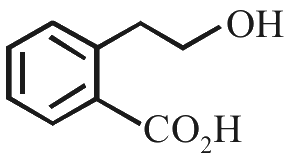
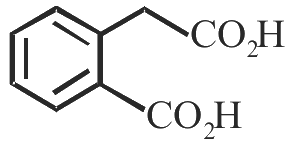
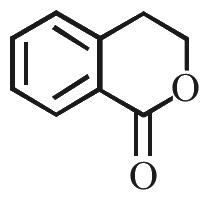
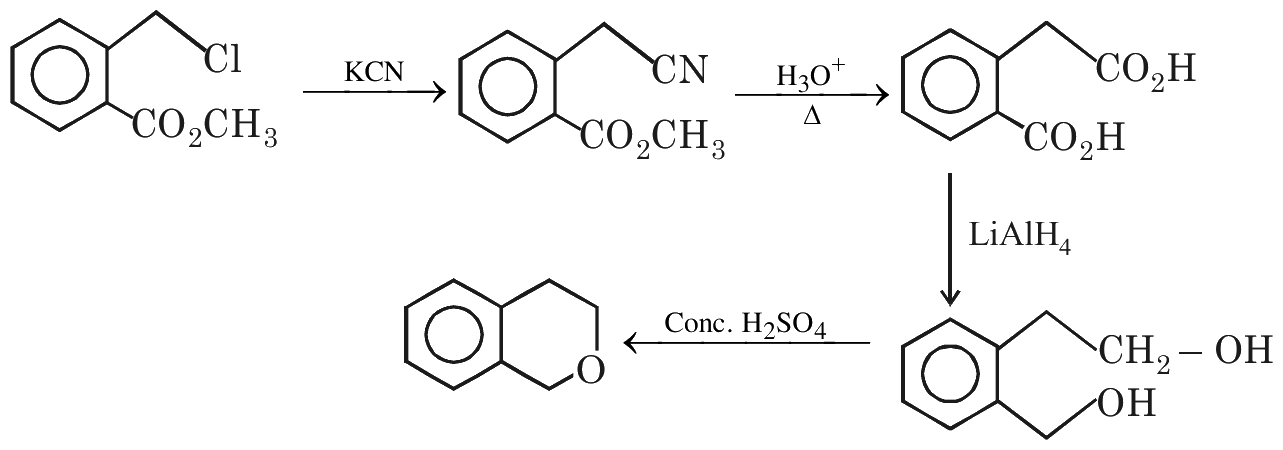
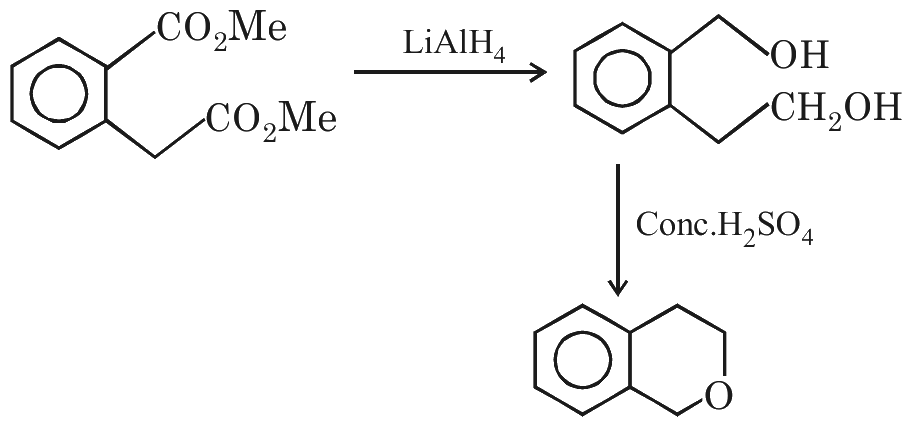
(III): KCN, then H3O+ gives the diacid (T); LiAlH4 gives the diol (Q); conc. H2SO4 cyclises to isochroman (R) ⇒⇒\Rightarrow III: T, Q, R (IV): LiAlH4 gives the diol (Q); conc. H2SO4 gives isochroman (R) ⇒⇒\Rightarrow IV: Q, R figure figure Option (B): (IV), (Q), (R)
SolutionSolution

7 more Alcohol And Ether questions

Practise them free

Practise all 10 Alcohol And Ether PYQs

Untimed with solutions, or as a timed test. Your mistakes are saved so you can retry them.

Start free